
- All
- Product Name
- Product Keyword
- Product Model
- Product Summary
- Product Description
- Multi Field Search
 English
Views: 0 Author: Site Editor Publish Time: 2026-08-28 Origin: Site
When purchasing tires, are you often confused by how many tires can actually fit into a single container? Or how to maximize container space without damaging the tires? This directly impacts your shipping and overall landed costs.
If a shipment that could have fit into two containers ends up requiring three due to inefficient loading, you lose a full container's shipping cost—costing you thousands to tens of thousands of dollars unnecessarily.
On the flip side, cramming tires that require three containers into two can cause excessive compression. Damaging the tire beads compromises crucial performance metrics like load-bearing capacity and wear resistance. As the saying goes, "Penny wise, pound foolish."
Container capacity directly determines your average freight cost per tire. A standard 40HQ (High Cube) container typically holds 200 to 320 truck tires (TBR). Because different tire specifications vary in dimensions and weight, the overall loading capacity naturally differs.
| Tire Size | Market | Application / Terrain | Avg. Weight (kg) | Single Volume (m³) | 40HQ Load Qty (pcs) | Total Net Weight (Tons) |
|---|---|---|---|---|---|---|
| 315/80R22.5 | Central Asia, Caucasus, Chile | Long haul / Heavy load | 66.0 | 0.35 | 240 | 15.84 |
| 315/70R22.5 | Caucasus, Chile, Central Asia | Highway Express / Standard load | 61.0 | 0.32 | 250 | 15.25 |
| 295/80R22.5 | Central Asia, Chile | Regional transport / Passenger coach | 58.0 | 0.31 | 260 | 15.08 |
| 12R22.5 | Central Asia, Caucasus | Mixed road / Heavy dump | 62.0 | 0.34 | 245 | 15.19 |
| 13R22.5 | Central Asia (Mining/Heavy) | Mining / Construction / Dump truck | 70.0 | 0.37 | 228 | 15.96 |
| 385/65R22.5 | Chile (Port/Mining), Caucasus | Trailer steer / Super single | 74.0 | 0.38 | 194 | 14.36 |
| 12.00R20 | Central Asia (Unpaved roads) | Tube-type heavy mining / Rough road | 72.0 | 0.36 | 228 | 16.42 |
| 11R22.5 | Chile, Caucasus | Standard Freight / Highway | 54.0 | 0.29 | 280 | 15.12 |
| Average / Estimated 40HQ Load Performance | 241 | 15.40 | ||||
Central Asia: High demand for heavy-duty, wear-resistant tires suitable for rough roads. Mining and heavy-haul tube-type specifications (such as 13R22.5 and 12.00R20) are in huge demand, making them ideal to stock up on.
Caucasus Region: Dominated by mountainous terrain and hills, with highly developed highway transport and cross-border logistics. Versatile specifications suitable for both long-haul highways and winding mountain roads sell best (such as 315/80R22.5 and 315/70R22.5).
South America (e.g., Chile): A mature market with strong demand for long-haul standard loads, low rolling resistance, and large mining-specific tires, including 315/80R22.5, 295/80R22.5, and super single trailer tires like 385/65R22.5.
Pro Tip for Buyers in These Regions:
Consider mixed loading (nesting)! Many of our clients import light truck (LTR) or passenger car tires (PCR) alongside their TBR orders. Nesting smaller tires inside the hollow cavities of larger truck tires increases total container volume by 30% to 50%, drastically cutting shipping costs without damaging the tires. Our trained loading crew carefully manages insertion angles and force to prevent deformation, ensuring your order is loaded in maximum volume and in optimal condition.
Before actual loading, we calculate the maximum loading capacity and scientifically match different tire specifications. This is why our logistics team can load up to 220 tires in a 40HQ container where standard freight forwarders might only fit 200.
Worked Example: Specification 315/80R22.5
40HQ Container:
Usable Volume (V) = 68.0m³ (after door frame clearance);
Payload Limit = 26.5 tons.
315/80R22.5 Tire:
Outer Diameter (D) = 1.076m;
Section Width (W) = 0.312m;
Unit Weight (G) = 58.0kg.
Single Tire Volume: D*D*W = 1.076*1.076*0.312 ≈ 0.3612m³
Theoretical Straight Capacity: 68/0.3612≈188.26pcs
Under uncompressed straight loading, a 40HQ container fits 188 pieces of 315/80R22.5 tires.
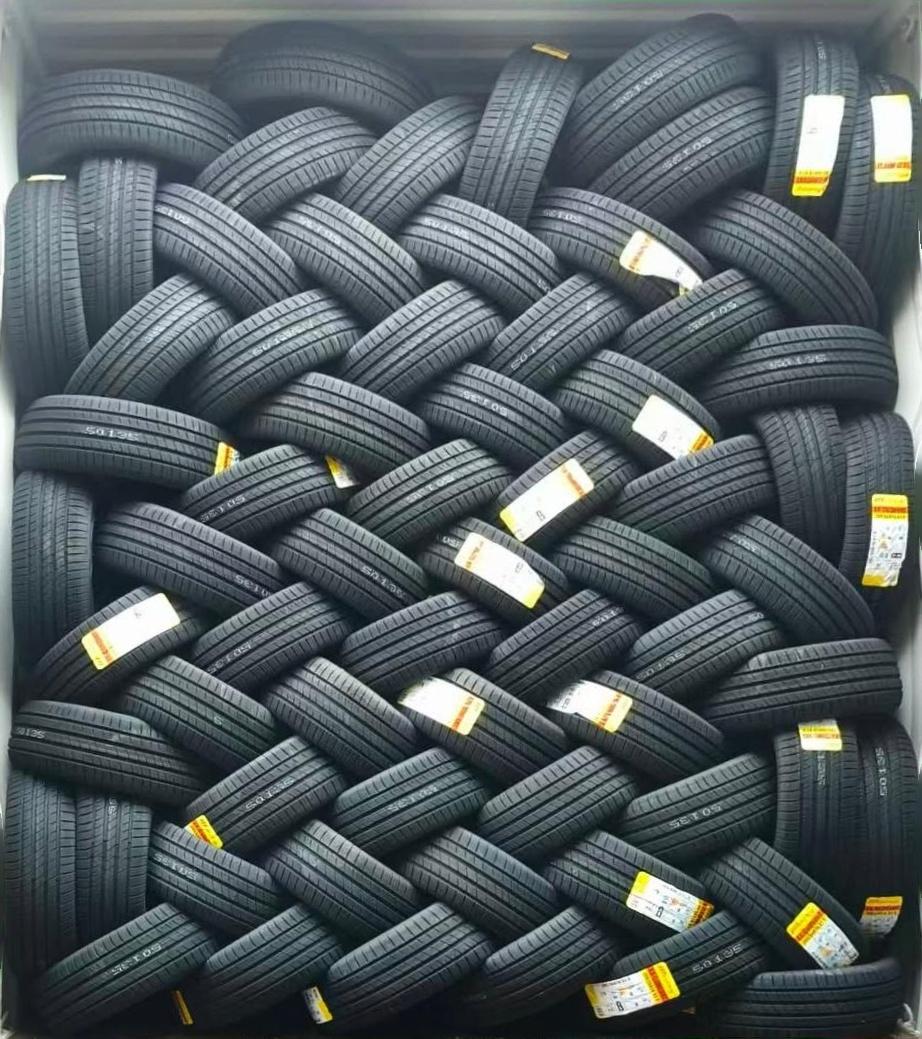
Cross-stacking (herringbone pattern) increases space utilization by approximately 30%:
Cross-stacked Capacity = 188*1.3≈244.4pcs
Accounting for door closure space clearance, the practical loading capacity settles at around 240 pieces.
The regulatory payload limit for a 40HQ container is $26.5\text{ tons}$. For 240 pieces:
Total Net Cargo Weight = 240*58.0=13.92tons
At 13.92tons, the cargo weight is far below the 26.5 ton limit, meaning payload capacity will not restrict shipping efficiency.
For size 315/80R22.5, the optimal full-container loading plan is approximately 240 pieces. For nested orders (doubling/tripling), calculations vary based on the specific size mix.
Tire Nesting & Mixed Loading Solutions
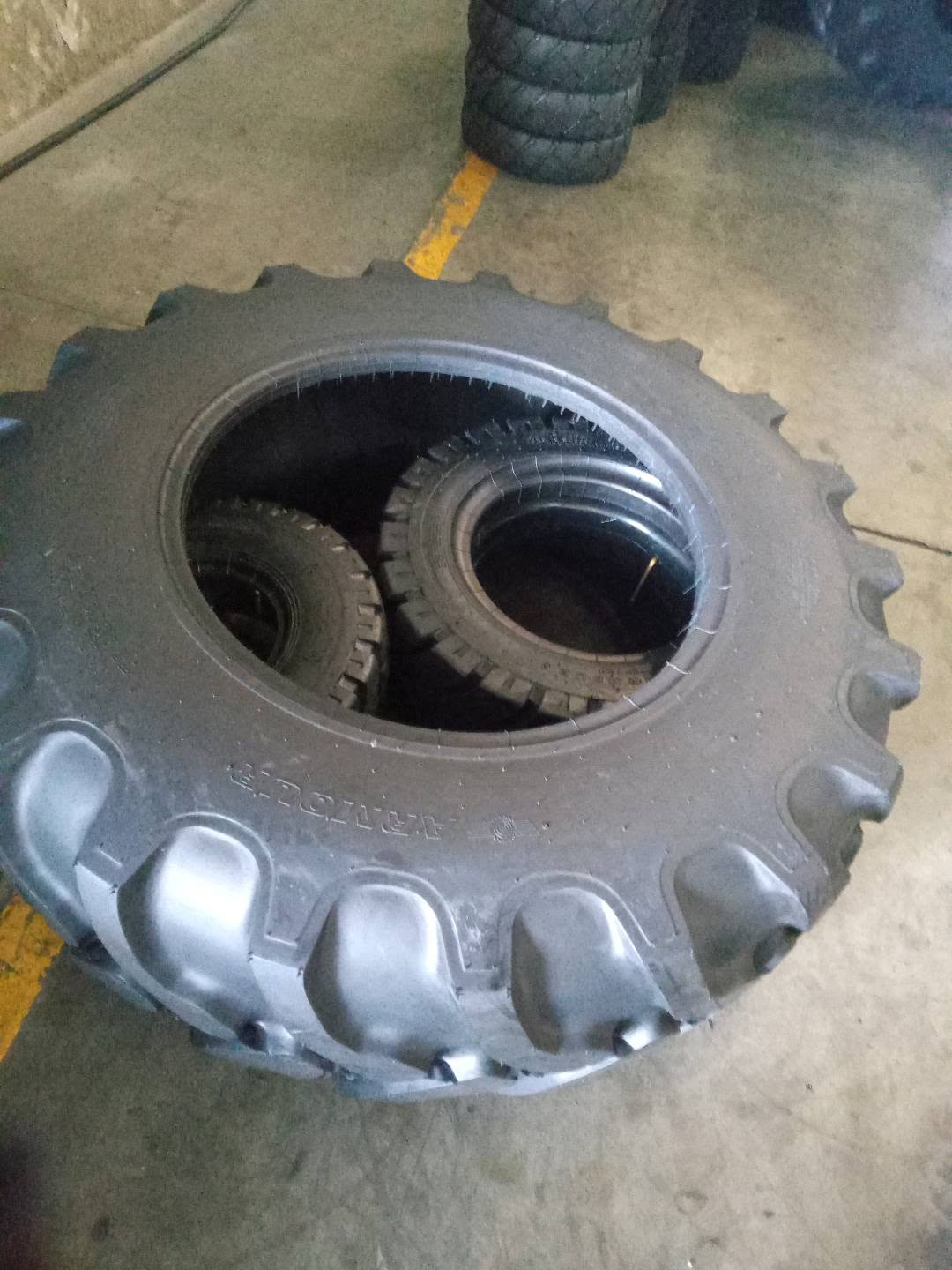
Nesting one PCR tire (e.g., 175/70R13 or 185/65R15) inside a large TBR casing (e.g., 315/80R22.5 or 12R22.5). This utilizes existing empty inner space without adding extra outer volume.
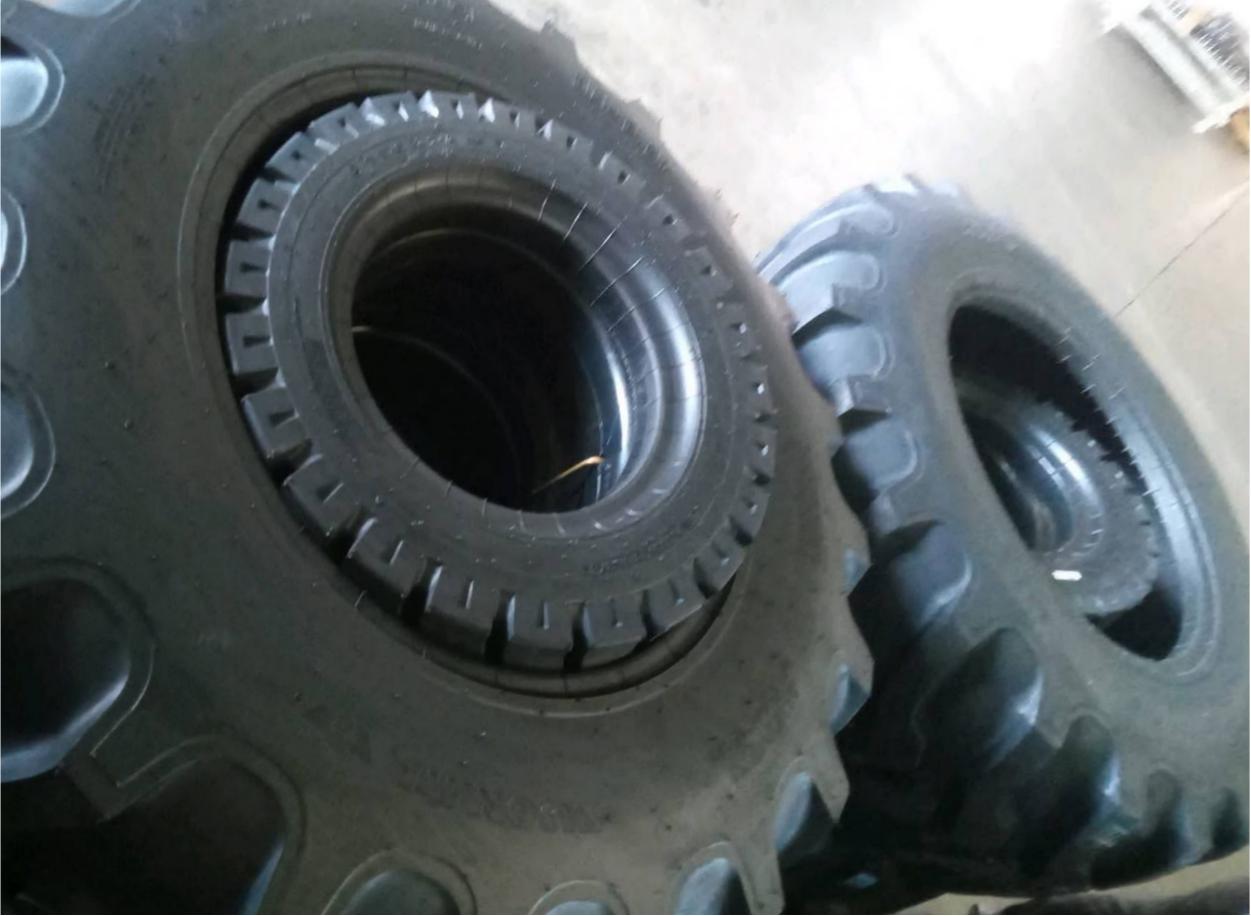
Layering tires inside one another from outer to inner casing. This maximizes inner space utilization but requires experienced workers and specialized tools for loading and unloading.

Stacking large TBR tires normally and filling remaining gaps along the container sides and ceiling with loose smaller tires. This option avoids nesting while still utilizing extra space.
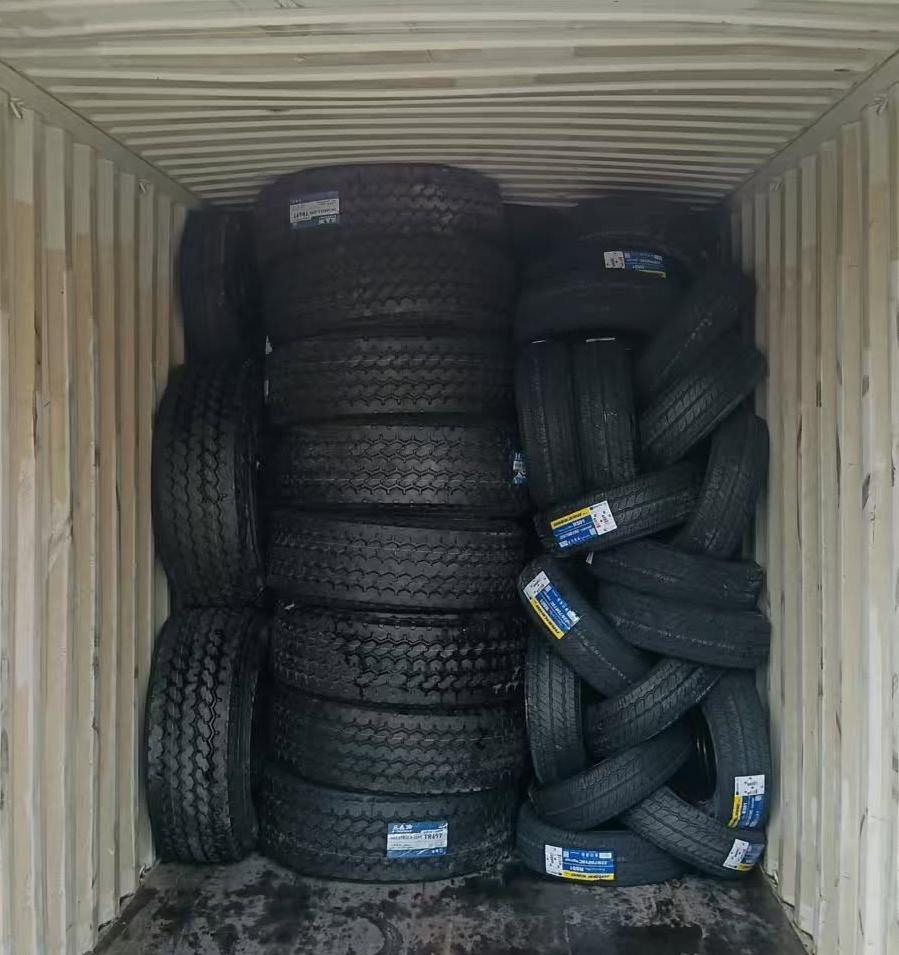
Here are some examples of popular sizes:
| Solution Type | Loading Combination & Specs | Total 40HQ Tire Count |
|---|---|---|
| Straight TBR Loading (Baseline) | 315/80R22.5 (240 pcs) | 240 pcs |
| Single Nesting (Doubling) | 315/80R22.5 (240 pcs) | 480 pcs |
| + 185/65R15 (240 pcs) | ||
| Multi-Nesting (Tripling) | 315/80R22.5 (240 pcs) | 720 pcs |
| + 195/75R16C (240 pcs) | ||
| + 155/65R13 (240 pcs) | ||
| Space-Filling Mix (TBR + LTR) | 12R22.5 (130 pcs) | 550 pcs |
| + 7.50R16 Loose Fill (420 pcs) |
Assuming a 40HQ container ocean freight rate of $4,000 USD:
Straight TBR Load (240 pcs): Freight cost per TBR = $16.66 USD
Doubling Load (240 TBR + 240 PCR): Based on a 5:1 volume ratio between TBR and PCR, freight cost per TBR drops to $13.89 USD, while freight cost per PCR is just $2.78 USD.
This substantially lowers landed costs compared to shipping passenger tires separately in a full container.
A 40HQ straight load fits approximately 240 pieces of 315/80R22.5 or 245 pieces of 12R22.5.
Average Freight per Tire = Total Container Freight \ Total Tire Quantity
Yes. We offer multiple nesting solutions depending on your requested size mix, which can save between 20% and 35% in average ocean freight per tire.
In regions with strict axle-weight or highway limits, shipping heavy TBR tires alone may hit weight thresholds before filling the volume. Mixing your order with lighter passenger or light truck tires optimizes container weight and volume balance.
Tires may undergo minor temporary compression during transit, which is normal. Our trained loading crew adheres to strict angles and pressure controls to prevent structural damage, allowing tires to regain their original shape upon unloading.
Special tools are not required. Workers can easily pull out the tires using standard manual tire hooks. We also provide step-by-step unloading guides and video tutorials upon request.
Our professional logistics team focuses on maximizing container space while prioritizing product integrity. Send us your required size list today for a free custom loadability and cost-optimization calculation!
WHATSAPP: +86-15895239086 / Julia Zhao
Jiangsu Source Valley International Co., Ltd. -- Your One-Stop Procurement Consulting Company!
Shipping empty space in a container directly inflates your landed cost per tire. This comprehensive guide breaks down the loading capacity of a standard 40HQ container for popular TBR truck tire specifications (including 315/80R22.5, 12R22.5, and 13R22.5). It covers a step-by-step mathematical model balancing volumetric space, 30% herringbone cross-stacking density gains, and local highway weight limits for key markets like Central Asia, the Caucasus, and Chile. Furthermore, it outlines practical tire nesting solutions (Doubling and Tripling) that allow buyers to cut average ocean freight costs by up to 30% without risking tire bead deformation or damage.
Read MoreShipping empty space in a container directly inflates your landed cost per tire. This comprehensive guide breaks down the loading capacity of a standard 40HQ container for popular TBR truck tire specifications (including 315/80R22.5, 12R22.5, and 13R22.5). It covers a step-by-step mathematical model balancing volumetric space, 30% herringbone cross-stacking density gains, and local highway weight limits for key markets like Central Asia, the Caucasus, and Chile. Furthermore, it outlines practical tire nesting solutions (Doubling and Tripling) that allow buyers to cut average ocean freight costs by up to 30% without risking tire bead deformation or damage.
Read More


